The axis begins in astronomy
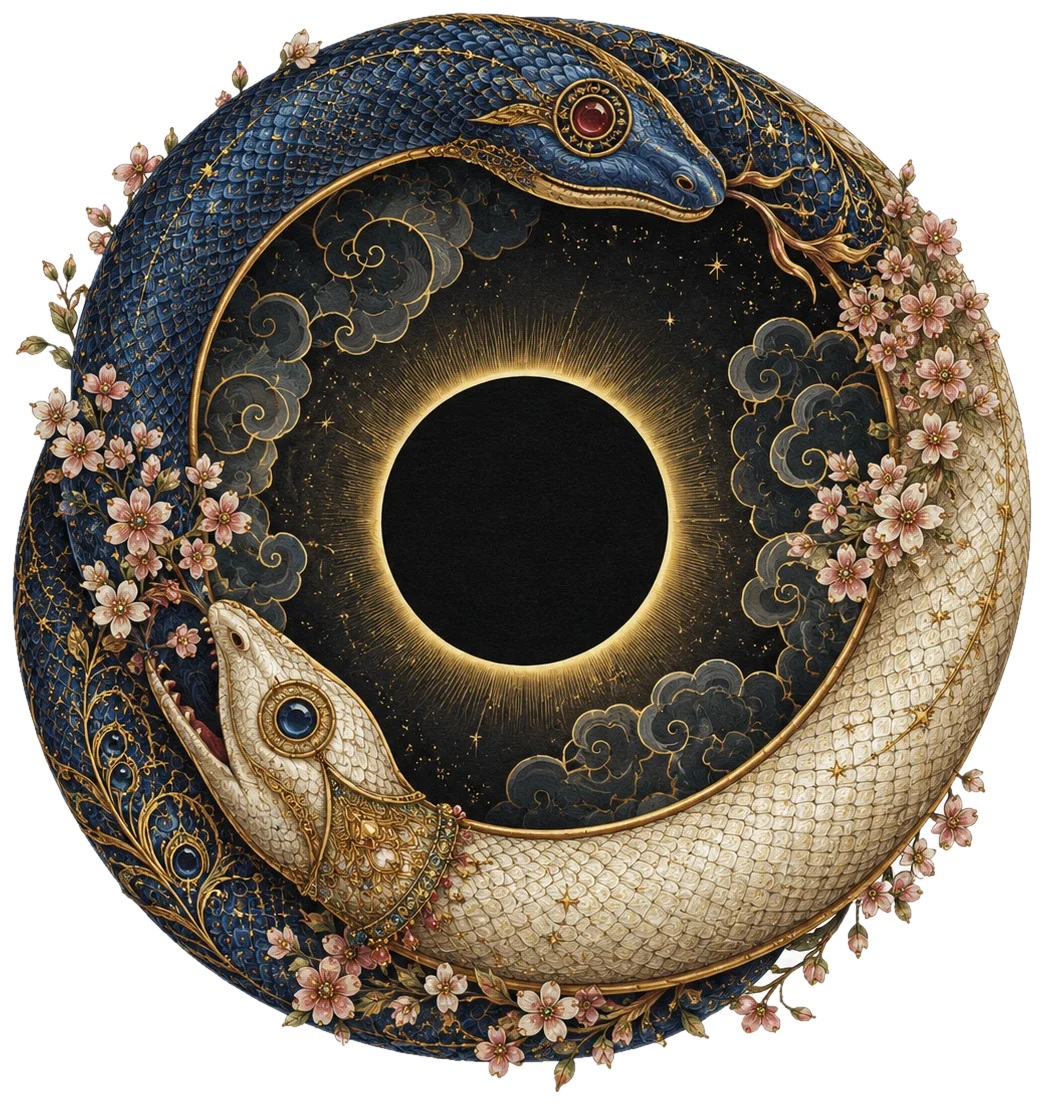
Rahu and Ketu are the lunar nodes: the two points where the Moon's orbit crosses the apparent path of the Sun. Eclipses happen near these nodes, which is why the nodal axis has always carried a charged, shadowy symbolism. In Jyotish, that astronomy becomes psychology, timing and karma.
Rahu is often read as the hungry head: appetite, fixation, ambition, foreignness, sudden rise, taboo topics and the place where the mind wants more. Ketu is the headless tail: detachment, memory, loss of worldly appetite, instinctive skill and the place where something feels familiar but unfinished.
Why the loop repeats
A Rahu-Ketu pattern repeats because it is an axis, not two separate placements. Rahu pulls attention forward, while Ketu carries an old reflex. When the person reaches for Rahu without integrating Ketu, the same story can reappear in new clothes: a different relationship, workplace, city or spiritual practice, but the same hunger and avoidance underneath.
The sign and house show the field of life. The nakshatra shows the texture of the craving or wound. The dispositors show who controls the axis. Dasha and transit timing show when the pattern becomes loud enough to demand a response.
How to work with it
The practical goal is not to kill Rahu or worship Ketu. Rahu needs direction, ethics and patience. Ketu needs recognition, grounding and sometimes grief. When the axis is handled well, Rahu becomes innovation instead of addiction, and Ketu becomes wisdom instead of withdrawal.
A good Rahu-Ketu reading should name the repeating loop, show the chart proof, explain the timing windows and give behavioral remedies that can actually be practiced. Fear-based language around nodes is usually a sign that the reading is not finished.